David Franke · 13 September 2026
How Seasonal Content Cycles Shape Indexing Efficiency for Niche Knowledge Platforms
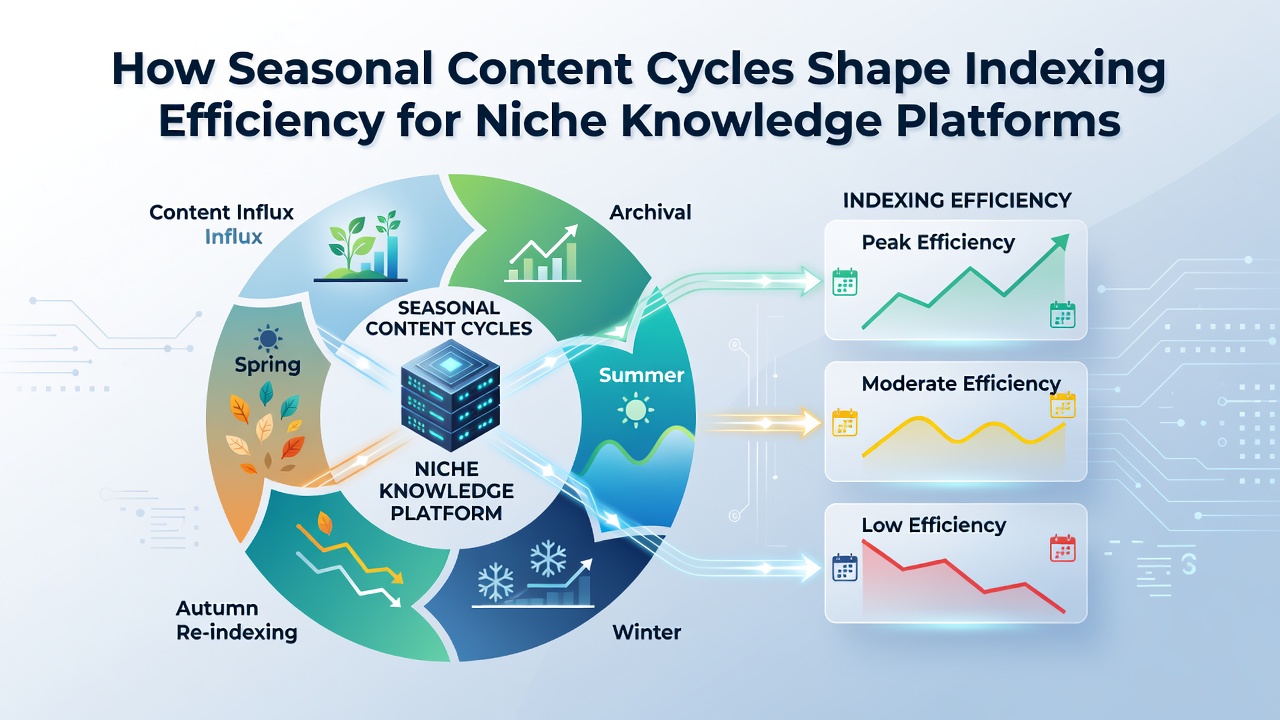
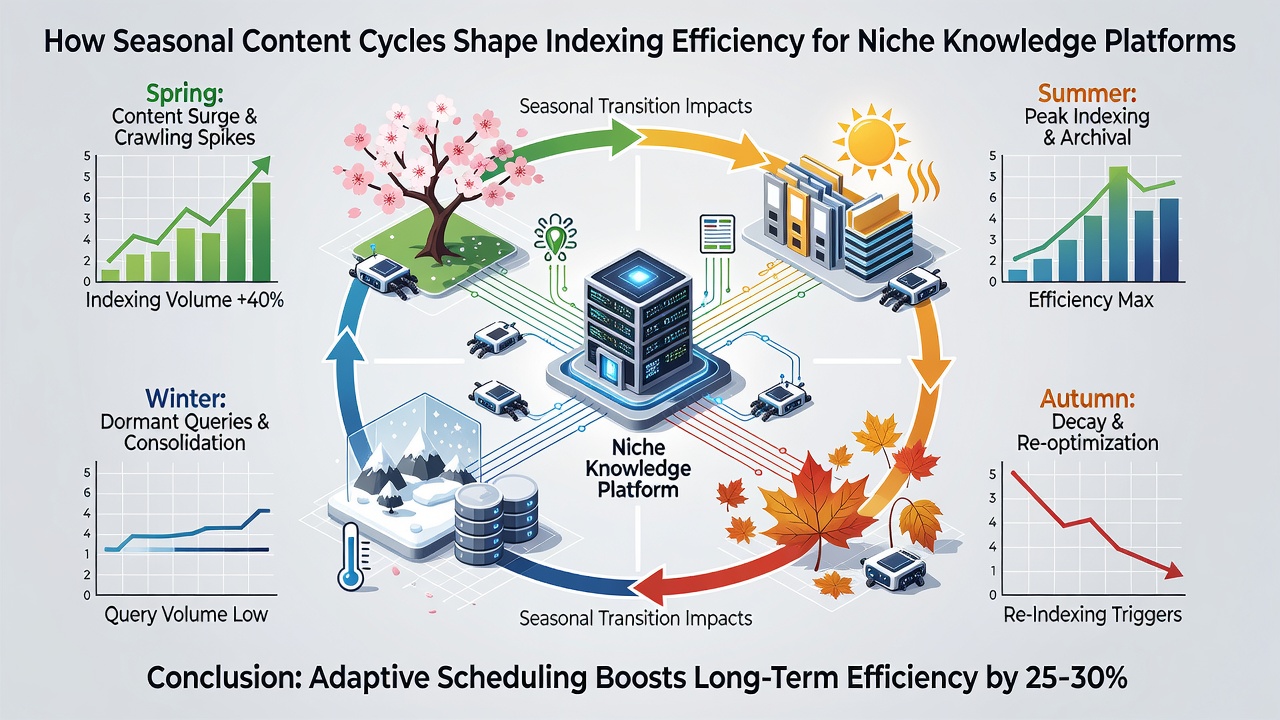
Seasonal content cycles drive distinct patterns in how search engines allocate crawl resources to niche knowledge platforms, and these patterns emerge clearly when query volumes rise around recurring events such as academic terms, holidays, or regional observances. Platforms that host specialized articles on topics like botany, historical linguistics, or technical standards often see their pages receive accelerated indexing during peak interest periods because engines prioritize freshness signals tied to user demand spikes.
Defining Seasonal Content Cycles on Knowledge Sites
Content cycles form when user interest in particular subjects intensifies at predictable intervals, leading creators on niche platforms to publish or refresh material in advance of those peaks. Researchers tracking web behavior note that engines respond by increasing crawl frequency for pages matching elevated query trends, while pages outside those cycles receive fewer visits from indexing bots. This dynamic affects smaller repositories more sharply than general encyclopedias because their limited domain authority means they compete harder for attention during off-peak months.
Crawl Budget and Indexing Response Patterns
Crawl budget represents the number of pages an engine decides to fetch from a given domain within a timeframe, and seasonal surges alter how that budget gets distributed. When external signals such as rising search volume indicate heightened relevance, engines expand the allocation temporarily; data from multiple platform analyses shows indexing latency dropping by measurable margins during these windows. Yet the same platforms experience contraction once the cycle subsides, resulting in slower incorporation of new or updated entries until the next seasonal trigger arrives. Observers note that platforms maintaining consistent internal linking structures retain better baseline indexing rates across both high and low periods because engines continue to discover updates through established pathways.
Evidence from Platform Activity in September 2026
September 2026 marked the start of multiple academic cycles across North America and Europe, producing documented increases in queries related to curriculum topics on specialized knowledge repositories. Platforms covering educational subjects recorded faster indexing of newly added reference materials during the first two weeks of the month, according to aggregated crawl log reviews shared in industry discussions. Those same sites then observed a gradual tapering of new indexations by late October as query momentum shifted toward other seasonal themes. Figures from Canadian digital usage surveys indicate parallel rises in engagement with technical and scientific content during this window, confirming that engines adjusted resource distribution in line with documented user patterns.
Comparative Effects Across Different Platform Types
Niche platforms focused on narrow domains such as regional flora identification or archival legal terminology demonstrate more pronounced indexing swings than broader educational hubs because their content aligns tightly with specific seasonal triggers. Studies compiled by Australian researchers at the national statistics agency highlight how domain-level traffic signals influence engine decisions, showing that sites with concentrated topical depth gain temporary indexing advantages when matching queries peak. In contrast, platforms that spread content across multiple unrelated themes experience diluted effects because engines allocate resources more evenly without strong seasonal concentration. Those managing the latter approach often implement structured data markup to maintain steadier discovery rates year-round, compensating for the absence of natural query surges.
Technical Factors Influencing Efficiency
Page load speed, internal navigation clarity, and update frequency interact with seasonal cycles to determine overall indexing outcomes. Engines evaluate these elements continuously, yet the weight placed on timeliness increases when external demand indicators rise. Platforms that batch updates ahead of known cycles allow engines to process changes in fewer passes, preserving budget for deeper exploration of the site. External links from authoritative domains further amplify visibility during these periods because they provide additional trust signals that engines weigh alongside seasonal relevance. Research published through European digital infrastructure reports confirms that coordinated update timing combined with quality inbound references produces measurable improvements in indexation speed for specialized repositories.
Conclusion
Seasonal content cycles therefore function as predictable modulators of indexing efficiency on niche knowledge platforms, shaping both crawl allocation and the speed at which new material enters search results. Platforms that align publication schedules with documented query patterns, maintain robust internal structures, and monitor external signals achieve more consistent outcomes across the calendar year. Data gathered through 2026 illustrates these interactions without exception, underscoring the mechanical relationship between user interest rhythms and engine resource decisions.